fire alarm price: Complete Guide to Costs, Types and Systems
August 13, 2026Searching for competitive fire alarm prices is a critical first step when equipping any commercial, industrial, or residential facility. Ensuring safety requires striking a perfect balance between initial installation costs and the level of protection needed to satisfy civil defense mandates. In the Egyptian market, fire alarm prices vary significantly based on system architecture, brand reputation, technical specifications, and international certifications.
While individual entry-level components like smoke detectors and notification accessories start around 450 EGP, high-end addressable control units can range anywhere from 25,000 EGP to over 80,000 EGP for internationally recognized brands such as WATEX, Simplex, Apollo, and Honeywell. Whether you are fitting out a modest retail storefront or a large-scale manufacturing plant, UPCO Egypt presents this detailed guide to help you navigate overall equipment costs, factors affecting supply and installation fees, and how to select the ideal safety solution tailored to your project.
Understanding Fire Alarm Systems and Detection Mechanisms
The overall fire alarm prices in the market depend heavily on how a system operates and the specific environments it protects. As one of the core pillars of life safety infrastructure in commercial, industrial, and residential properties, a fire alarm system provides rapid detection of thermal hazards, drastically mitigating risks to human life and structural assets.
If you are planning to equip a new facility or upgrade your existing security infrastructure, understanding the core system types and how their underlying mechanics drive overall costs is crucial:
- Early Hazard Detection: Modern systems monitor ambient environments for early indicators such as smoke particulates, abnormal heat increases, or optical radiation from flames.
- Immediate Notification: Upon detecting a threat, the central system triggers audible sounders and visual strobes to alert building occupants for quick evacuation.
- Automated Suppression Integration: High-tier control systems integrate directly with automated fire suppression setups (such as water sprinklers or clean gas flooding systems) to contain fires instantly without human intervention.
Types of Fire Alarm Detectors & Sensors
Sensors act as the frontline defense in any life safety system. Selecting the correct sensor depends entirely on the nature of the hazard, ambient environmental conditions, and budget requirements. UPCO Egypt delivers comprehensive solutions offering the best fire alarm prices across all sensor categories:
|
Sensor Type |
Operating Mechanism |
Primary Applications |
|
Smoke Detectors |
Identifies airborne smoke particles during early stage smoldering. |
Corporate offices, homes, hotel rooms, and administrative facilities. |
|
Heat Detectors |
Triggers upon sensing rapid or abnormal temperature rises. |
Commercial kitchens, boiler rooms, and dust-prone storage areas. |
|
Flame Detectors |
Optical sensors detect infrared (IR) or ultraviolet (UV) radiation emitted by open flames. |
Industrial plants, chemical warehouses, and high-risk storage zones. |
|
Gas Detectors |
Measures ambient concentrations of flammable or hazardous gases. |
Commercial kitchens, gas fill stations, and chemical processing facilities. |
|
Multi-Criteria Detectors |
Combines multiple sensing methods (e.g., optical smoke + thermal) within one unit. |
Comprehensive protection for complex facilities to reduce false alarms. |
Pro Tip: Choosing the right sensor type depends on environmental conditions, local safety regulations, and project scope. You can contact UPCO Egypt directly for tailored technical advice and up-to-date fire alarm prices.
You can also explore fire alarm monitoring company to discover more useful information that can help you make the right decision for your specific needs.
The Core Brain: The Fire Alarm Control Panel
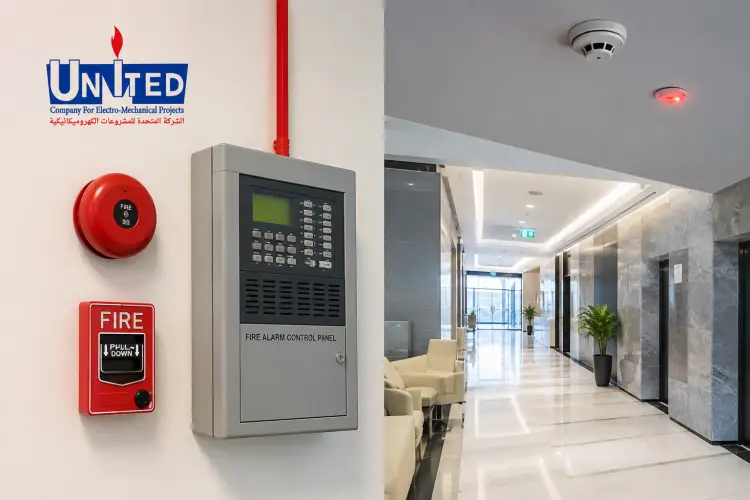
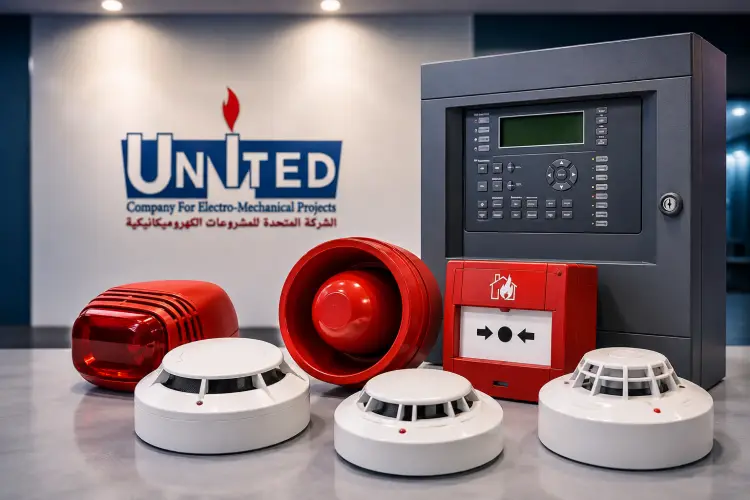
A fire alarm control panel acts as the central intelligence unit of any safety infrastructure. It links all field sensors, manual pull stations, notification devices, and auxiliary emergency relays into a unified monitoring ecosystem.
Key Functions of a Central Panel:
- Signal Processing: Receives and analyzes input signals from connected field devices (smoke, heat, flame, or gas detectors).
- Alarm Activation: Instantly triggers audio-visual alarms across designated zones upon verifying a fire condition.
- Precise Pinpointing: Displays the exact location of an active alarm (a critical feature of addressable control units).
- Auxiliary Automation: Interfaces directly with building management systems (BMS) to shut down HVAC units, release magnetic door holders, recall elevators, and trigger automatic gas suppression.
- Event Logging: Stores detailed historical logs of system alerts, faults, and maintenance events for auditing and troubleshooting.
Primary Panel Configurations:
- Conventional Control Panels: Group devices by physical zones. When an alert triggers, the panel indicates the general zone rather than the exact detector.
- Addressable Control Panels: Assign a unique digital address to every individual detector or module. This allows operators to pinpoint the exact location of an emergency instantly.
Because the central unit dictates system scalability, selecting an accredited unit directly influences your total fire alarm prices. Contact UPCO Egypt today for current price quotes on certified panels.
Market Price Table: Fire Alarm Components in Egypt
Actual fire alarm prices across Egypt fluctuate based on technical features, international certifications, loop capacities, and market conditions. Below is an indicative market guide for common equipment available through UPCO Egypt:
|
Component / Model |
System Type & Application |
Estimated Price Range (EGP) |
|
Conventional Panel (2–4 Zones) (HST / Thorn) |
Conventional – Small retail shops & offices |
5,500 – 11,000 EGP |
|
Conventional Panel (8 Zones) (Honeywell CFAS-408) |
Conventional – Medium commercial premises |
17,500 – 20,000 EGP |
|
Addressable Panel (1–2 Loops) (Simplex 4007 / Apollo / WATEX) |
Addressable – Commercial buildings & clinics |
44,000 – 77,000 EGP |
|
Large-Scale Addressable Panel (Simplex 4100ES) |
Addressable – Industrial complexes & towers |
85,000 – 140,000+ EGP |
|
Suppression Control Panel (Simplex 4004) |
Gas/Agent Release Control Panel |
26,000 – 30,000 EGP |
|
Smoke Detector Egypt Options (Optical / Ionization) |
Field Detection Devices |
Starting from 450 EGP |
Note: The above fire alarm prices are indicative reference points. Final system pricing depends on complete Bill of Quantities (BOQ) requirements, including cabling, installation labor, programming, and module integration.
For more information that can help you choose the right solutions and products, read fire alarm installation company and explore the useful details and tips provided.
Key Factors Influencing Total Fire Alarm Prices
When evaluating proposals for a project, you will notice that overall fire alarm prices vary significantly from one property to another. Key factors driving overall costs include:
- System Technology (Conventional vs. Addressable): Conventional setups carry lower upfront hardware costs, whereas addressable systems carry higher hardware investments but significantly reduce long-term maintenance and offer precise monitoring.
- Facility Size & Layout: Larger floor areas and multi-story structures demand higher detector counts, longer cable runs, and higher-capacity control units.
- Hazard Classification: Heavy industrial zones, fuel storage facilities, and server rooms require specialized explosion-proof or high-sensitivity equipment, shifting total fire alarm prices.
- International Accreditations: Equipment certified by global bodies such as UL (Underwriters Laboratories), FM (Factory Mutual), or EN54 carries higher manufacturing standards and pricing than uncertified market alternatives.
- Cabling & Fire-Rated Infrastructure: Installing fire-resistant cabling (PH30/PH120) inside protective conduits forms a significant portion of overall material and labor budgets.
- Third-Party System Integrations: Interfacing the fire alarm control panel with elevators, smoke extraction fans, emergency doors, and automated suppression systems requires extra control modules and testing.
Why Do Prices Differ Between Suppliers?
When sourcing life safety hardware in Egypt, you may encounter widely varying proposals. UPCO Egypt stands out in the engineering market due to several distinct advantages:
- Direct Sourcing & Agency: UPCO Egypt serves as an official agent for WATEX (UAE) in Egypt. Sourcing equipment directly eliminates unnecessary intermediary markups, guaranteeing customers access to the best fire alarm prices.
- Compliance & Certification: UPCO Egypt prioritizes UL/FM and EN54 approved products, ensuring seamless approval during Egyptian Civil Defense inspections.
- Turnkey Engineering Services: Rather than operating solely as a trader, UPCO Egypt provides full-scope engineering—including design, drafting, wiring installation, panel programming, testing, and commissioning.
- After-Sales Maintenance & Support: Long-term safety relies on regular maintenance contracts, spare parts availability, and 24/7 technical assistance.
Comparing proposals purely based on low fire alarm prices can lead to hidden costs if cheap, unaccredited hardware fails to pass regulatory inspections or lacks after-sales support.
Preparing a Bill of Quantities (BOQ) & Installation Plan
Calculating an accurate project estimate involves far more than simply checking individual component price tags. A professional engineering firm like UPCO Egypt builds a structured Bill of Quantities (BOQ) around five key pillars:
- Risk Analysis & Code Assessment: Assessing room dimensions, ceiling heights, ventilation rates, and hazardous storage to calculate required detector coverage.
- Cable Routing & Conduiting: Specifying exact meters of certified fire-rated cabling and durable metal/PVC conduits.
- Device Placement Optimization: Ensuring full coverage with optical Smoke Detector Egypt units, heat sensors, manual call points, and notification strobes without redundant overlap.
- System Programming & Testing: Allocating specialized engineering hours to program addressable panel loops, input/output logic matrixes, and cause-and-effect sequences.
- Civil Defense Approval Preparation: Ensuring every installed component matches official architectural safety plans for smooth final licensing.
If you want to learn more about useful information and important details, check out fire smoke detector to explore the key points that may help you.
Partnering with UPCO Egypt for Your Fire Safety Needs
Choosing a qualified engineering partner guarantees that your safety infrastructure operates flawlessly when seconds count. UPCO Egypt offers turnkey solutions spanning system design, equipment supply, certified installation, and annual maintenance contracts tailored to your operational budget.
Investing in a high-quality fire alarm system protects lives, safeguards capital investments, and protects your business from costly regulatory downtime. For transparent quotation reviews, technical consultations, or competitive fire alarm prices, reach out to the engineering team at UPCO Egypt.
Frequently Asked Questions (FAQ)
What is the main difference between conventional and addressable fire alarm systems?
Conventional systems group detectors into broader zones, making them suitable for smaller properties. Addressable systems assign a unique digital address to every single device, enabling operators and emergency responders to pinpoint the exact room or location where an alarm was triggered.
Can a fire alarm control panel automatically activate fire suppression systems?
Yes. Modern addressable systems can be programmed through control modules or specialized suppression panels to automatically trigger clean agent gas systems (like FM-200 or CO2) or deluge sprinkler networks upon detecting fire conditions.
How do I select the proper smoke detector options for my project in Egypt?
Selection depends on room functionality, ceiling clearance, and potential environmental interference. Standard optical units are ideal for general office spaces, while multi-criteria or beam detectors are preferred for high ceilings, warehouses, or dusty industrial areas. Contacting UPCO Egypt ensures you receive proper selection guidance alongside competitive fire alarm prices.