Portable Fire Extinguishers: Types, Uses & Safety Guide
July 14, 2026A fire can double in size in a matter of seconds, leaving you with a very narrow window to react. Portable fire extinguishers are the most important safety tools that help control fires in their early stages, which limits human and material losses. Having the right tool at the right moment is what stands between a minor accident and a complete disaster. These extinguishers are available in different types, each designed to deal with specific classes of fire; therefore, choosing the right type and using it in the correct way is an essential element in enhancing safety inside homes, offices, factories, and commercial establishments. In this article, we will learn about the types of fire extinguishers and their uses with pictures, and the most important tips for choosing and maintaining them.
What Are the Types of Portable Fire Extinguishers? And What Are Their Uses?
The experts at upcoegypt offer you a simplified explanation of the types of ABCD portable fire extinguishers and the uses of each type, as follows:
Types of Portable Fire Extinguishers and Their Uses
|
Type of Portable Fire Extinguisher |
Uses |
|
Water Extinguisher |
Used to extinguish fires of solid materials such as wood, paper, and fabrics (Class A). |
|
Foam Extinguisher |
Suitable for fires of flammable liquids such as gasoline and paints, in addition to some solid material fires (Classes A and B). |
|
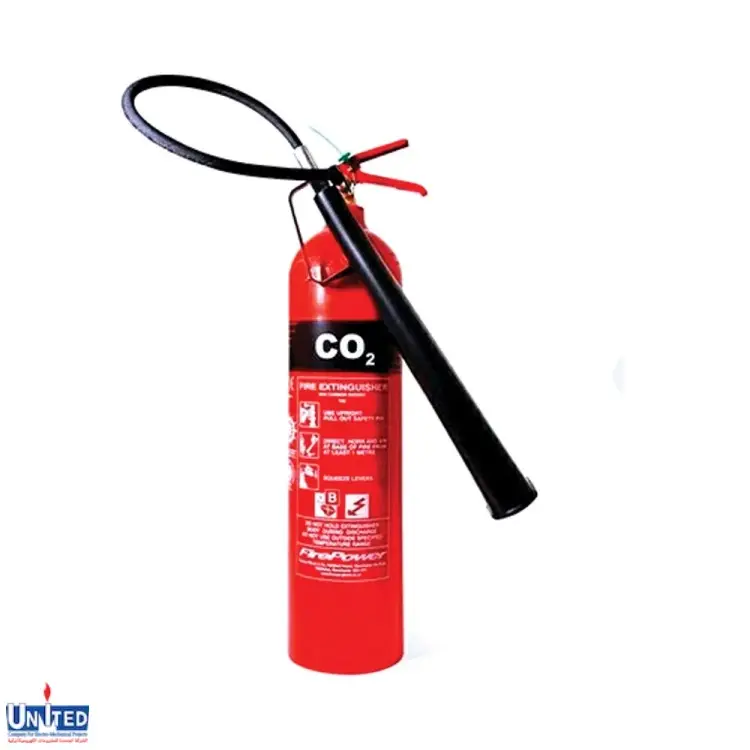
Carbon Dioxide ($CO_2$) Extinguisher |
Ideal for fires of electrical appliances and control panels, and can also be used with flammable liquid fires (Class B). |
|
Dry Powder Extinguisher (ABC) |
Multi-use and deals with fires of solid materials, liquids, and flammable gases (Classes A, B, and C). |
|
Metal Dry Powder Extinguisher (Class D) |
Designated for extinguishing fires of flammable metals such as magnesium, sodium, and aluminum (Class D). |
|
Wet Chemical Extinguisher |
Used to extinguish fires of oils and fats in commercial kitchens (Class F), and can also be used with some Class A fires. |
Advantages of Portable Fire Extinguishers
Portable fire extinguishers are the first line of defense and are among the most indispensable safety equipment in homes, commercial, and industrial establishments, due to their ability to control fires in their beginning and limit their spread. Among their most prominent advantages:
- Speed of Response: Helps extinguish the fire in its early stages before it worsens.
- Ease of Use: A portable fire extinguisher is considered one of the easy means to extinguish a fire and can be used easily after obtaining simple training.
- Diversity of Types: Available in more than one type to suit different classes of fire, so it is important to know types of portable fire extinguishers to choose the appropriate one.
- Ease of Transportation and Storage: Fire cylinders are characterized by their appropriate size and the possibility of placing them in places that are easy to access during emergencies.
- Reducing Losses: Portable fire extinguishers contribute to protecting lives and property and reducing damage resulting from fires.
- Low Maintenance Costs: Do not need complex maintenance, but are limited to periodic inspection and refilling when necessary.
- Availability of Multiple Options: Capacities and specifications vary to suit homes, offices, and factories, and the prices of fire extinguishers for shops vary according to the type of extinguisher, its capacity, and the brand, allowing you to choose the most suitable.
Get a quote: Check out the latest Firefighting Equipment Prices to secure your property with top-notch safety systems.
Where Should Fire Extinguishers Be Distributed Inside Facilities?
Choosing the correct distribution locations for portable fire extinguishers is a fundamental factor in the speed of dealing with fires; therefore, extinguishers must be installed in clear and easy-to-reach places. Among the most important distribution locations for portable fire extinguishers:
- Entrances and exits of buildings to facilitate access to them during emergencies.
- Corridors and stairs to ensure their availability in evacuation routes.
- Kitchens, whether domestic or commercial, while choosing the appropriate extinguisher for oil and fat fires.
- Electricity rooms and distribution boards using extinguishers designated for electrical fires.
- Warehouses and stores that contain flammable materials.
- Factories and workshops according to the nature of the materials and equipment used.
- Offices and commercial facilities so that the extinguishers are distributed in a way that ensures easy access to them by all workers.
- Parking lots and garages, especially in closed places or those with high vehicle density.
To ensure the highest level of safety, installation locations must be chosen according to safety requirements, with periodic inspection and maintenance of portable fire extinguishers, and one can benefit from guiding manuals such as types of fire extinguishers and their uses PDF to learn about the appropriate extinguisher for each type of fire and how to use it correctly.
How Do You Ensure the Validity of a Fire Extinguisher?
Checking the validity of portable fire extinguishers periodically is one of the most important safety procedures that ensure their readiness for use in emergencies. The inspection includes ensuring the safety of the extinguisher body and that it is free of rust or damage, reviewing the pressure indicator to ensure it is within the recommended level, in addition to checking the extinguisher hose, safety pin, and ensuring the presence of the maintenance tag and recording previous inspection dates.
Periodic maintenance of portable fire extinguishers must also be carried out by specialized and approved bodies, with refilling them immediately after use or when their expiration date ends. Adhering to regular inspection and maintenance processes helps ensure the efficiency of the extinguisher when needed, and reduces the risks of malfunctions that may affect the speed of controlling fires and protecting lives and property.
Fire Extinguisher How to Use in the Correct Way
The correct use of portable fire extinguishers ensures quick and effective dealing with fires in their early stages, while maintaining the safety of the user. Before using any fire extinguisher, you must make sure that it is suitable for the type of fire, then stand at a safe distance with an exit behind you to be able to evacuate if necessary, and follow these steps regarding fire extinguisher how to use:
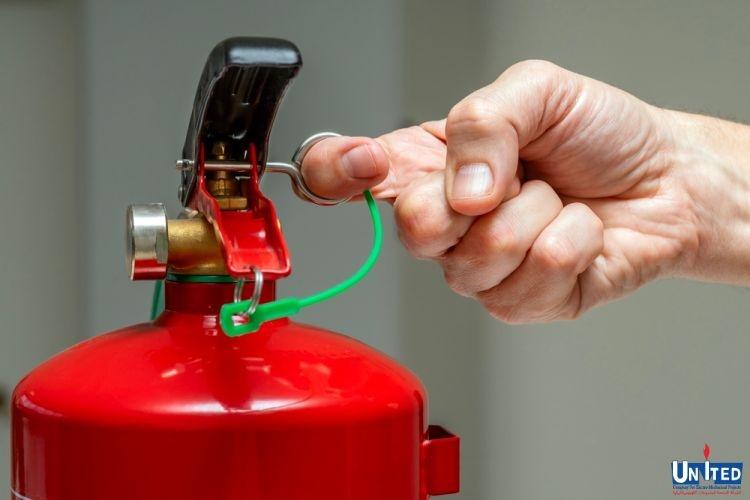
- Pull the safety pin from the top of the fire extinguisher.
- Aim the nozzle or hose of the extinguisher at the base of the flame, not at the top of the fire.
- Squeeze the operating handle to release the extinguishing agent.
- Sweep the nozzle slowly from right to left until the fire is completely extinguished.
- Watch the place after extinguishing to ensure that the fire does not ignite again, and contact the Civil Defense if the fire is large.
What Are the Fire Extinguishers Approved by the Civil Defense?
The specialized authorities in the Civil Defense rely on a group of portable fire extinguishers designed to deal with different types of fires, and the choice of the appropriate extinguisher is determined according to the type of burning material and the nature of the risks at the site. The approved civil defense fire extinguisher types include the following:
- Water extinguishers for solid material fires.
- Foam extinguishers for flammable liquid fires.
- Carbon Dioxide ($CO_2$) extinguishers for electrical fires.
- Dry Powder (ABC) extinguishers which are multi-use.
- Wet Chemical extinguishers designated for cooking oil fires.
- Class (D) extinguishers used to extinguish flammable metal fires.
It is always advised to choose the appropriate type according to safety requirements and Civil Defense instructions to ensure the highest level of protection.
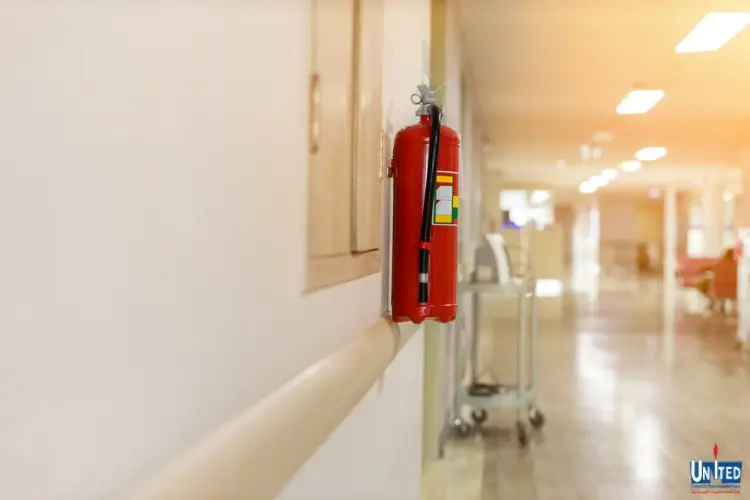
Ultimate guide: Discover the different Fire Extinguisher Types and how to choose the right one for every fire class
How to Choose the Appropriate Fire Extinguisher
Choosing the appropriate portable fire extinguishers depends on the nature of the place and the type of potential risks, so several factors must be considered before purchasing:
- Identify the expected type of fire: Choose the appropriate extinguisher for fires of solids, liquids, gases, electrical appliances, or cooking oils.
- Choose the appropriate capacity: Extinguisher capacities vary according to the area of the place; homes usually need smaller capacities compared to factories and warehouses.
- Ensure compliance with specifications: Make sure to buy an approved extinguisher that meets safety and Civil Defense requirements.
- Review the production and maintenance date: Ensure that the extinguisher is recent and subject to periodic inspection to guarantee its readiness when used.
- Compare between brands: Quality and characteristics vary from one company to another, so it is advised to compare specifications and after-sales services.
- Take the budget into consideration: Prices of Bavaria fire extinguishers vary according to the type of extinguisher, its capacity, and the extinguishing material, so it is best to choose the product that provides the best balance between quality and price.
Colors of Fire Extinguishers and What Does Each Color Indicate?
Learning about the types of fire extinguishers and their colors helps in choosing the appropriate extinguisher for each type of fire, as the color of the strap on the extinguisher indicates the extinguishing material and its designated use. The following table explains in detail the difference between the colors:
|
Extinguisher Color |
Type of Portable Fire Extinguishers |
What Does the Color Indicate? |
|
Red |
Water Extinguisher |
Indicates the use of water as an extinguishing material. |
|
Cream |
Foam Extinguisher |
Indicates that the extinguisher contains foam material. |
|
Black |
Carbon Dioxide ($CO_2$) Extinguisher |
Indicates the use of Carbon Dioxide gas. |
|
Blue |
Dry Powder Extinguisher |
Indicates that the extinguisher contains dry chemical powder. |
|
Yellow |
Wet Chemical Extinguisher |
Indicates the use of a wet chemical material designated for kitchens. |
|
Yellow (for Class D) |
Metal Powder Extinguisher |
Indicates a special material for extinguishing metal fires. |
Tips to Maintain the Readiness of Fire Extinguishers
To ensure that portable fire extinguishers remain ready for use at any time, you must adhere to a set of maintenance and preventive inspection procedures, the most important of which are:
- Conducting a periodic inspection of the extinguisher and ensuring the safety of all its parts.
- Ensuring that the pressure indicator lies within the green range.
- Placing the extinguisher in a visible and easy-to-reach place away from obstacles.
- Protecting the extinguisher from direct sunlight, moisture, and high temperatures.
- Ensuring the safety of the hose, safety pin, and seal, and that they are not exposed to damage or tampering.
- Not using the extinguisher for other than emergencies or trying to operate it without need.
- Refilling the extinguisher immediately after using it, even if the use was partial.
- Adhering to periodic maintenance at an approved body according to the manufacturer's recommendations.
- Training workers or family members on the correct way to use the extinguisher when needed.
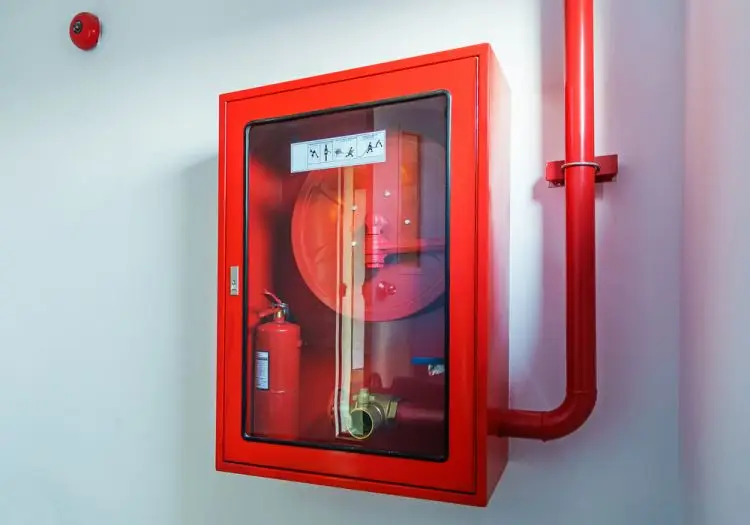
Partner with professionals: Contact a certified Fire Extinguisher Company for high-quality supplies, inspection, and maintenance services
Frequently Asked Questions
What are the types of fire extinguishers and their uses?
The question of what are the types of fire extinguishers is one of the questions that many search for, which the experts of upcoegypt answer as follows: The main types of fire extinguishers include: Water, Foam, Carbon Dioxide ($CO_2$), Dry Powder (ABC), and Wet Chemical, and each type is used to extinguish specific classes of fires.
What is the difference between FM200 and $CO_2$?
The FM200 extinguisher relies on a clean gas that leaves no residue and is suitable for protecting server rooms and electronic devices, while the $CO_2$ extinguisher uses Carbon Dioxide gas and is an effective option for electrical fires, but it reduces the oxygen percentage in closed places.
What are five types of fire extinguishers?
The five most common types are:
- Water extinguisher.
- Foam extinguisher.
- Carbon Dioxide ($CO_2$) extinguisher.
- Dry Powder (ABC) extinguisher.
- Wet Chemical extinguisher.
How do I know that the fire extinguisher is valid for use?
Make sure that the pressure indicator is in the green range, that the seal and safety pin are present, that the outer body of the extinguisher is sound, and that the maintenance date is valid.
What is the best fire extinguisher for offices and factories?
In offices, the $CO_2$ extinguisher is suitable for protecting electrical devices, while the Dry Powder (ABC) extinguisher is used in factories thanks to its ability to deal with multiple types of fires.
Can the powder extinguisher be used for all types of fires?
No, although the Dry Powder (ABC) extinguisher is suitable for fires of solids, liquids, and gases, it is not the ideal choice for cooking oil fires (Class F) or some metal fires that need specialized extinguishers.
Conclusion
Portable fire extinguishers are an essential investment in protecting lives and property, and choosing and maintaining them in the correct way ensures quick and effective response when fires occur. To obtain high-quality extinguishing systems and integrated solutions that meet the highest safety standards, we advise you to cooperate with upcoegypt, the sole and exclusive agent of the Emirati Watex company in Egypt, to provide reliable products and professional services that suit various sectors. Contact us now on this number (01006135405).