Fire Hose Price in Egypt: Types, Specs, Cost & Buying Guide
November 10, 2026Searching for the fire hose price is a priority for contractors, safety engineers, procurement managers, and commercial and industrial facility owners, especially when outfitting fire-fighting systems and complying with civil defense requirements. Choosing the right hose depends not only on the price, but also requires considering manufacturing quality, hose diameter, water pressure resistance capacity, and compliance with the required standards and approvals.
From this perspective, the United Electro-Mechanical Projects Company (UPCO Egypt) provides a guide to help you understand the factors affecting the fire hose price in Egypt, enabling you to select the product that achieves the right balance between quality, cost, and safety requirements.
What Factors Determine Fire Hose Prices?
The fire hose price varies depending on technical specifications, manufacturing quality, and the nature of use within the facility. Therefore, to choose the right hose for your project needs and accurately determine your budget, you should pay attention to a set of key factors:
1. Hose Dimensions and Diameter
The diameter of the hose is one of the most critical factors determining its price, as it varies according to the nature of use:
- 1-inch Fire Hose: Commonly used in indoor fire hose reels, offering ease of use and suitability for initial firefighting operations.
- 1.5-inch Fire Hose: Used in indoor fire hose cabinets, providing a balance between water flow rate and ease of handling.
- 2.5-inch Fire Hose: Suitable for main fire hose cabinets and applications requiring high water flow rates; therefore, its cost is typically higher than smaller sizes.
Fire safety is essential for protecting commercial and industrial facilities, and you can explore different solutions through our guide to Fire extinguisher company.
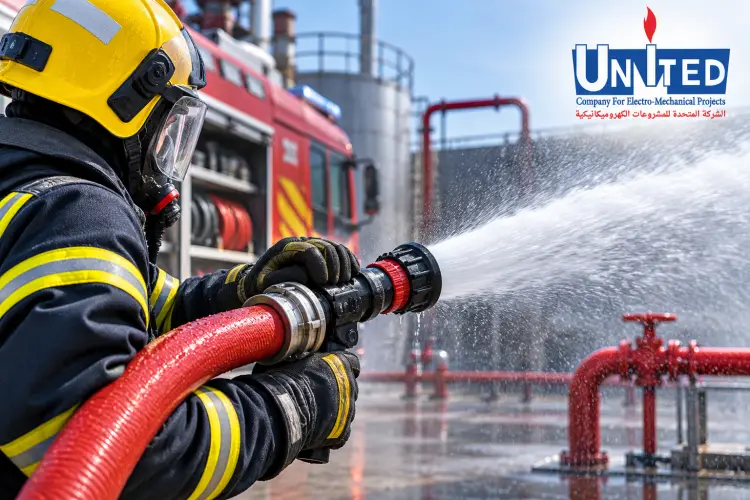
2. Working and Bursting Pressure
A hose's ability to withstand water pressure directly impacts the fire hose price and its quality. The primary categories include:
- 10 Bar Pressure: Suitable for certain low-pressure system requirements.
- 16 & 20 Bar Pressure: Features stronger reinforcement and higher pressure resistance, making it suitable for demanding systems, though at a higher cost compared to lower-rated categories.
3. Material and Coating
The fire hose price varies according to the materials used in its construction. The most popular types include:
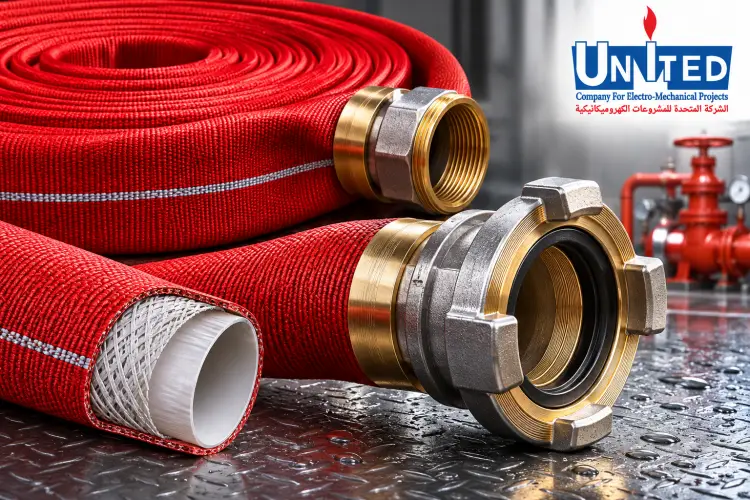
- Canvas / Textile Hoses: Made from a polyester woven jacket with an internal lining of rubber (EPDM) or polyurethane (PU). They are lightweight, easy to handle, and competitively priced.
- Rubber / Nitrile Hoses: Characterized by high resistance to abrasion, oils, and chemicals, making them ideal for factories, industrial plants, and harsh environments. They are generally more expensive due to their durable materials.
4. Couplings and Accessories
The final cost is also determined by the fittings attached to the hose:
- Bare Hose: Supplied without couplings, making it less expensive; ideal for those who already have fittings.
- Hose with Couplings (Storz): Comes equipped with aluminum or brass couplings and can be supplied with a fire nozzle, making it ready for connection and use according to system specifications.
Tip: Do not let the fire hose price be your sole selection criterion. Ensure the hose diameter, pressure rating, and materials match your engineering specifications and Civil Defense requirements to guarantee the efficiency of your firefighting system and facility safety.
Choosing the right safety equipment helps improve workplace protection and emergency preparedness. Learn more about available fire hydrant.
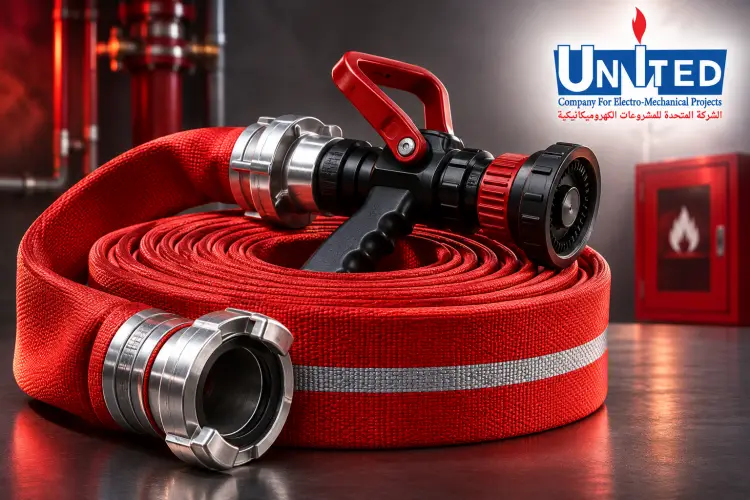
Fire Hose Types and Price Table
Fire hose prices vary by diameter, material, pressure rating, and attached accessories. The following table illustrates the indicative average prices for some commonly traded types in the Egyptian market:
|
Fire Hose Type |
Primary Use |
Pressure Rating |
Approximate Price |
|
1" Hose (Rubber / Reel) |
Indoor hose reels in residential and commercial buildings |
12–15 Bar |
2,500 – 3,500 EGP |
|
1.5" Hose (Lined Canvas) |
Fire cabinets in hospitals, malls, and schools |
16–20 Bar |
4,200 – 5,500 EGP |
|
2.5" Hose (Lined Canvas) |
Outdoor fire cabinets and main suction lines |
16–24 Bar |
5,800 – 7,500 EGP |
|
2.5" Hose (Nitrile Rubber) |
Factories, petroleum facilities, and chemical environments |
20–30 Bar |
8,500 – 11,500 EGP |
|
NFPA Approved Hose with Storz Couplings |
Major projects and engineering inspection requirements |
20–40 Bar |
7,000 – 10,000 EGP |
Note: Prices are indicative based on provided data and may vary depending on the country of origin, requested quantities, technical specifications, accessories, and shipping costs. Always verify approval certificates and compliance documentation for each product before purchasing.
To request a technical and financial quotation tailored to your project needs, contact the United Electro-Mechanical Projects Company (UPCO Egypt).
Proper fire safety planning requires reliable equipment and preventive measures. Discover the different types and applications of fire extinguishing equipment.
Beware the Low-Price Trap: Why Should You Buy a Certified Fire Hose?
Buying low-priced fire hoses may seem like a way to reduce project costs, but it can expose your facility to significant risks—especially when using uncertified or non-compliant products from unknown sources. Major risks include:
- Hose Rupture During Operation: Inferior materials and weak reinforcement layers can cause the hose to burst under high water pressure or hydraulic shock (water hammer), disrupting firefighting operations and increasing fire damage risks.
- Rejection by Inspection Committees: Non-compliance with approved specifications and standards can lead to rejection during engineering inspections, resulting in additional expenses beyond the initial fire hose price to replace them, along with project operational delays.
At UPCO Egypt, we prioritize delivering fire hoses compliant with technical specifications and required approvals, backed by documentation such as Certificates of Origin (CO), pressure test reports, and compliance certificates to ensure system reliability and meet project safety criteria.
Accessories to Include When Budgeting for Fire Hose Costs
When setting a budget for a fire protection network, considering the hose price alone is not enough. You must factor in essential accessories that guarantee cabinet readiness and overall system performance:
- Fire Nozzle: Controls the direction and spray pattern of the water flow (fog vs. straight stream). Costs vary based on manufacturing material such as aluminum or brass.
- Landing Valves: Control the open/close flow of water from the fire network to the hose, available typically in 1.5-inch and 2.5-inch sizes.
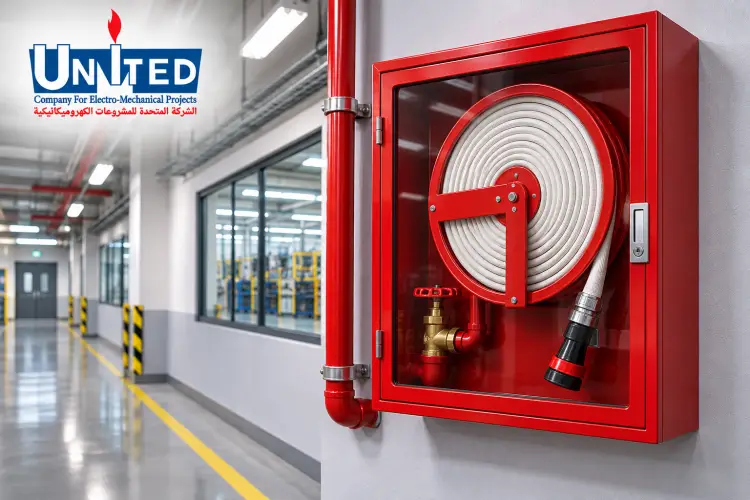
- Fire Hose Cabinet: Designed to house and protect the hose, valve, and nozzle from dust and environmental factors, available in surface-mounted or recessed designs.
- Hose Reel / Rack: Helps store and organize the hose to prevent twisting and tangling, allowing rapid deployment during emergencies.
Be sure to include all these components in your budget when calculating the overall fire network equipment costs.
Reliable detection and warning solutions play an important role in facility safety. Explore the importance of watex fire box in modern buildings.
Request a Technical and Financial Quotation for Your Project Now
Are you preparing to equip your factory, hospital, or commercial facility, and searching for reliable solutions to pass engineering inspections and Civil Defense tests?
UPCO Egypt provides free, detailed bill-of-quantities (BOQ) preparation services for supplying fire hoses and firefighting equipment in accordance with technical specifications and safety standards, including NFPA standards based on project requirements.
We offer safety engineers, contractors, and procurement managers diverse options with a competitive fire hose price tailored to your project budget, complete with technical documentation, certificates of origin, and inspection reports to support approval procedures.
Ultimately, choosing a specification-compliant fire hose is an essential step toward protecting lives, safeguarding property, and avoiding project rejection during inspection. Work with a trusted supplier offering certified, tested products to guarantee quality and safety.
UPCO Egypt delivers integrated solutions for certified fire hoses and equipment to meet the demands of commercial and industrial sectors at competitive prices.
Frequently Asked Questions
What is the standard length of a fire hose in cabinets?
The standard common length is 30 meters (100 feet), subject to design requirements and approved safety codes.
Do fire hoses come equipped with couplings or are they sold separately?
They are available either bare or fully equipped with aluminum or brass Storz couplings and a fire nozzle as a ready-to-install assembly upon request.
How do I verify that a fire hose is approved by Civil Defense?
Check for approval and compliance certificates such as UL and FM, inspect manufacturer data, working pressure, and production date stamped on the hose body, and review the accompanying technical test reports.