Secrets of Fire Alarm System Maintenance and How to Protect It from Malfunctions
September 8, 2026How to Maintain Fire Alarm Systems and Protect Them from Malfunctions and False Alarms
Fire alarm systems are among the most critical means of protecting lives and property within factories, institutions, and commercial facilities. However, installing the system alone is not sufficient to ensure its efficiency. Neglecting periodic inspection and maintenance can lead to sudden malfunctions or false alarms, which impacts workflow and reduces the response speed of personnel during an actual fire.
Periodic fire alarm system maintenance helps verify the efficiency of smoke and heat sensors, the integrity of connections, and the proper response of the control panel. It also contributes to early problem detection and minimizes the likelihood of false alarms, which may recur due to dust accumulation or a malfunction in one of the system's components.
In this guide from United Company, we review the most important maintenance steps, the primary causes of malfunctions and false alarms, along with a set of practical procedures that help maintain system efficiency and achieve the highest levels of protection and safety within your facility.
Basic Components of the Alarm System and How to Inspect Them
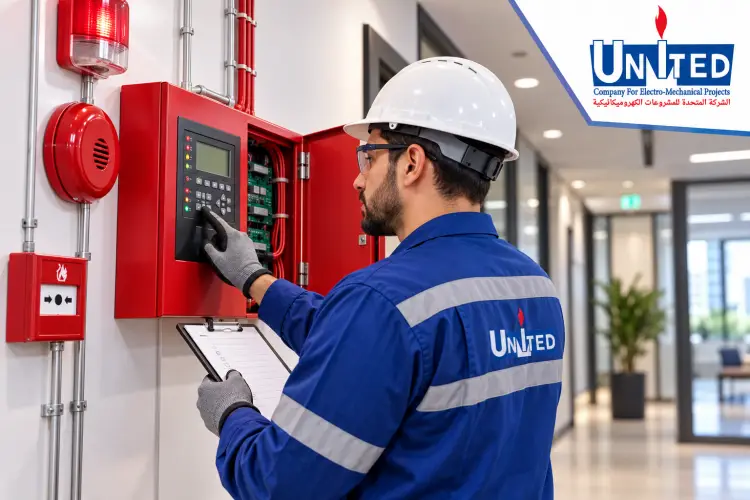
A fire alarm system consists of integrated components working together to detect fire and alert facility occupants in a timely manner. To ensure system efficiency and continuous operation, periodic fire alarm system maintenance and inspection must be conducted for each component to verify its integrity according to engineering standards and the manufacturer’s instructions.
Testing the Main Fire Alarm Control Panel (FACP) and Connections
-
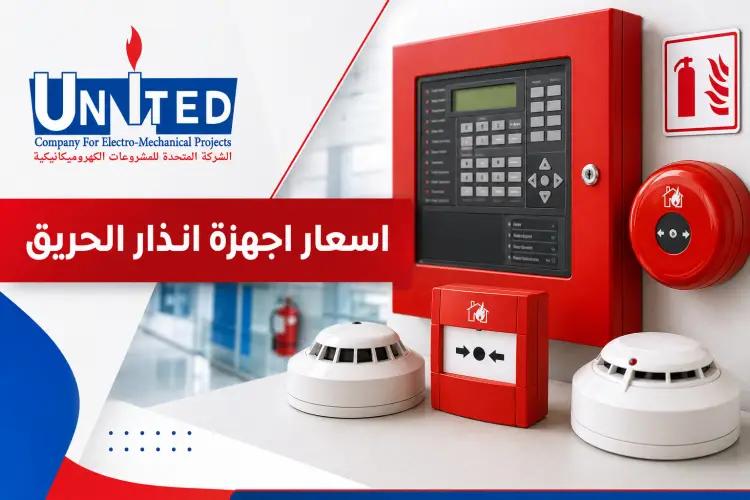
The Fire Alarm Control Panel (FACP) is the central hub of the system, receiving signals from detectors and controlling notification appliances. Inspecting it includes:
- Power Sources Inspection: Ensuring the efficiency of the main electrical power source, the condition of the backup batteries, and their capacity to operate during a power outage.
- Reviewing Fault Indicators: Ensuring no Faults/Troubles messages appear on the panel, and checking for any issues in the circuits or connections.
- Cables and Connections Inspection: Verifying the integrity of wires and terminals, ensuring there is no looseness or corrosion, and testing Loop Circuits to guarantee proper signal transmission.
Steps for Inspecting Smoke and Heat Detectors
Smoke and heat detectors serve as the frontline for early fire detection. Therefore, their maintenance, cleanliness, and proper response must be ensured by:
- Cleaning Detectors: Removing dust and dirt accumulated inside or around the detector, which may affect sensing accuracy and trigger false alarms.
- Response Testing: Using dedicated testing tools to simulate smoke or heat and confirming the detector sends the correct signal to the control panel.
- Sensitivity Checking: Verifying that the detector operates within the sensitivity range specified by the manufacturer, which guarantees rapid fire detection while minimizing unnecessary alarms.
Maintenance of Audible and Visual Notification Appliances
Audible and visual alarm devices alert occupants when a hazard is detected, including bells, sirens, and strobes. During maintenance, you must:
- Sound Level Testing: Activating notification appliances to ensure the sound is clear and reaches various areas of the facility, especially enclosed or highly noisy spaces.
- Visual Alerts Inspection: Checking the operational efficiency of Strobe Lights and their ability to alert occupants in areas where the audible alarm is difficult to hear.
- Integration with Evacuation Systems Review: Ensuring notification appliances integrate with control and evacuation systems, and that they function synchronously with the approved emergency scenario of the facility.
The Ideal Maintenance Schedule (Daily, Monthly, Annual)
To maintain the efficiency of the fire alarm system and reduce the likelihood of sudden malfunctions and false alarms, establishing a regular maintenance plan—covering daily, monthly, and annual inspections—is essential. This schedule facilitates early problem detection and ensures system readiness when needed.
|
Maintenance Frequency |
Key Inspection Procedures |
Goal of Maintenance |
|
Daily Maintenance (Visual Inspection) |
• Review the control panel to ensure a "Normal" state. • Ensure there are no Trouble or Disable signals. • Verify the stability of the main electrical power source. |
Ensuring system readiness and immediately detecting any visible alarm or fault. |
|
Monthly Maintenance |
• Check backup batteries and their charge status. • Inspect sample smoke and heat detectors and clean them if necessary. • Test audible and visual notification appliances. • Review the Event Log to monitor previous alerts and faults. |
Early detection of issues in components and connections before they escalate into system-affecting faults. |
|
Annual Maintenance (Comprehensive Inspection) |
• Clean and inspect all smoke and heat detectors. • Test detector sensitivity using appropriate testing devices. • Measure battery efficiency and replace damaged ones if necessary. • Test the control panel, circuits, and cables. • Review the integration of the alarm system with HVAC, doors, and fire suppression systems. |
Ensuring system efficiency, component integration, and continuous operation in accordance with approved safety requirements. |
Maintaining a Maintenance Logbook is a fundamental step to track all inspection, repair, and replacement operations. The logbook also helps document the system’s condition, reference previous faults, and supports fulfilling the requirements of competent authorities and insurance companies when needed.
Dealing with False Alarms and Their Technical Causes
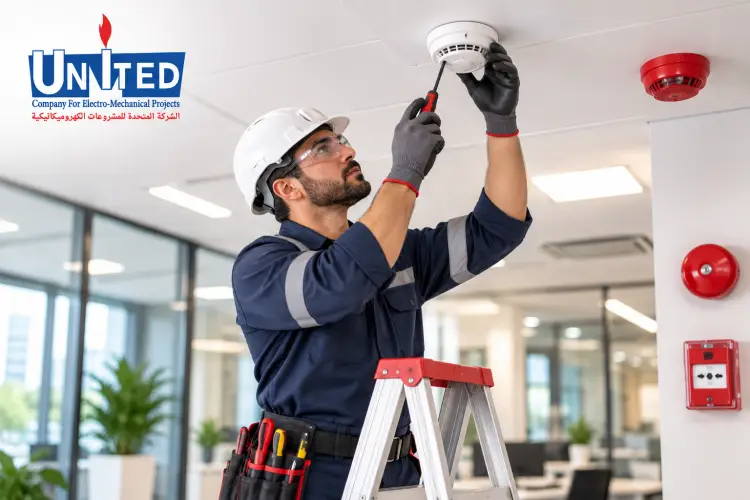
False Alarms are a common issue in fire systems. They can disrupt operations and cause panic. If they recur frequently, employees may lose trust in the alarm and respond with less urgency—a phenomenon known as Alarm Fatigue. Therefore, it is crucial to identify and address the technical causes rather than ignoring them.
Common Technical Causes of False Alarms
- Accumulation of dust and dirt inside smoke detectors.
- Humidity and steam in kitchens and damp areas.
- Insects and foreign objects entering the detectors.
- Electrical fluctuations or Electromagnetic Interference (EMI).
- Aging detectors or improperly calibrated sensitivity.
Technical Steps to Reduce False Alarms
- Selecting the appropriate detector for the nature of the environment.
- Periodically cleaning detectors and testing their sensitivity.
- Utilizing Alarm Verification when available and suitable for the system.
- Inspecting cables, connections, and batteries, and resolving any electrical faults.
Civil Defense Requirements for Alarm System Maintenance
Civil protection and civil defense authorities mandate specific regulations to ensure fire alarm system readiness in facilities. Compliance helps maintain safety and fulfills operational and licensing requirements.
Contracting with a Specialized Maintenance Company
- Securing a valid periodic maintenance contract with a specialized and certified company like United (UPCO).
- Providing technical support and rapid response during malfunctions and emergencies.
Documenting Inspection and Maintenance Work
- Maintaining a Maintenance Logbook that includes visit dates, inspection results, faults and repairs, and replaced spare parts.
- Retaining maintenance reports to present them during inspections by regulatory authorities.
Compliance with Technical Standards
- Ensuring system devices and spare parts comply with the Egyptian Code and NFPA 72 standards, integrating the alarm system with firefighting equipment, and selecting appropriate types of fire extinguishers for the specific risks inside the facility.
- Inspecting backup batteries to ensure their capacity to power the system during electrical outages, according to design requirements and the approved code.
Maintaining System Readiness
- Refraining from bypassing detectors or system zones (Disable) to eliminate false alarms; instead, address the underlying technical cause.
- Testing audible and visual notification appliances to ensure they reach various areas clearly for safe evacuation.
Tools and Technologies Used in Professional Inspection
Technicians and engineers specializing in fire alarm system maintenance rely on dedicated tools and devices that ensure accurate inspection and fault detection without damaging system components or triggering false alarms. The most notable include:
Detector Inspection and Cleaning Tools
- Smoke Detector Tester: To simulate smoke and test the response of smoke detectors.
- Telescopic Testing Poles: To easily and safely reach detectors mounted on high ceilings.
- Heat Testing Devices: To verify the response of heat detectors at their specified operating temperature.
- Suction and Cleaning Tools: To remove dust from detectors and mitigate the risk of false alarms.
Electrical Circuit Measurement Devices
- Digital Multimeter: To measure voltage, resistance, and circuit continuity.
- Battery Load Tester: To verify the efficiency and load capacity of backup batteries to run the system.
- Megger / Insulation Tester: To examine system cable insulation and detect leakage or ground faults.
Diagnostic and Calibration Devices
- Addressable Panel Diagnostic Software: To read the fault log and review the status of detectors and system components.
- Sound Level Meter: To measure the sound intensity of notification appliances, ensuring the alarm is clearly audible across different zones.
- United Company utilizes appropriate technical tools and equipment during inspection and maintenance operations, which elevates the efficiency of fire alarm systems and detects faults before they compromise system readiness.
Factors Affecting the Cost of Alarm System Maintenance
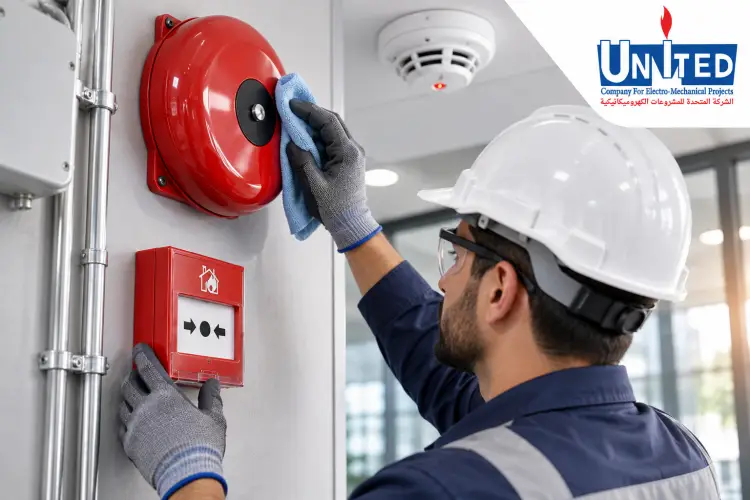
The cost of fire alarm system maintenance varies from one facility to another based on the system type, size, site nature, and the scope of the maintenance contract. Key factors include:
Type of Alarm System
- Conventional Systems: Generally lower in maintenance cost.
- Addressable Systems: Require specialized technicians and equipment to pinpoint and test each detector independently.
- Very Early Warning Aspirating Smoke Detection (VESDA): Requires inspecting pipes and filters and adjusting sensitivity, which increases maintenance costs.
Facility Size and Number of Devices
- The higher the number of detectors, sirens, control panels, and Loops, the more time and effort required for inspection, cleaning, and maintenance.
Site Nature and Accessibility
- Detectors located on high ceilings, in warehouses, or factories may require lifting equipment or scaffolding. Environments heavy in dust or chemicals also necessitate more frequent maintenance.
Type of Maintenance Contract
- Preventive Contract: Covers periodic inspections and visits.
- Comprehensive Contract: May cover spare parts, repairs, and replacements.
- Emergency Support (SLA): Rapid response and round-the-clock emergency services increase the contract cost.
Therefore, it is preferable to conduct a technical site survey before finalizing the price, to ensure the preparation of a maintenance quotation that accurately suits the facility's size, system type, and actual needs.
Services of United Company for Alarm System Inspection and Maintenance
United Company for Engineering Systems (UPCO) offers comprehensive services for inspecting and maintaining fire alarm and firefighting systems, employing a specialized team to guarantee system efficiency and readiness in line with safety requirements. Key services include:
Periodic and Preventive Maintenance
- Executing periodic maintenance visits to inspect system components.
- Testing control panels, circuits, and batteries.
- Cleaning and inspecting smoke and heat detectors to reduce faults and false alarms.
Corrective Maintenance and Emergencies
- Repairing faults such as severed cables, Ground Fault issues, and communication errors.
- Supplying original and compatible spare parts.
- Providing technical support for emergency situations.
Comprehensive Testing and Inspection
- Testing sirens, strobes, and notification appliances.
- Testing detector response using specialized testing tools.
- Inspecting the integration of the alarm system with HVAC, elevators, evacuation systems, and doors.
Reports and Maintenance Logs
- UPCO provides technical reports following inspection operations, alongside documenting maintenance work in Logbooks to help facilities monitor the system's condition and comply with safety and regulatory authority requirements.
Fire alarm system maintenance is not merely a routine procedure; it is an essential step to protect lives and property and guarantee system readiness during any emergency. Regular maintenance also helps reduce faults and false alarms while preserving system efficiency.
United Company for Engineering Systems (UPCO) provides supply, installation, inspection, and maintenance services for fire and safety systems. Operating through a dedicated team, it offers periodic maintenance contracts and rapid technical support tailored to the specific needs of each facility. This ensures the delivery of a maintenance quotation that fits the facility size and alarm system type, simultaneously helping clients identify firefighting equipment pricing and the total cost of fully equipping the facility to meet the highest safety standards.
Frequently Asked Questions
What are the main causes of fire alarm panel malfunctions?
-
Power and Battery Issues: Weak batteries, poor charging, or current fluctuations.
-
Ground Fault: Wires touching metal parts as a result of poor insulation.
-
Open/Short Circuits: Severed cables or loose connections.
-
Dust and Humidity: These can compromise the panel's electronic components.
-
Electromagnetic Interference (EMI): Generated by nearby motors or high-voltage power cables.
What is the difference between maintaining a Conventional System and an Addressable System?
In a Conventional System, the fault is displayed at the Zone level; therefore, the technician must manually inspect detectors and circuits to isolate the source of the problem.
In an Addressable System, the control panel can precisely pinpoint the exact detector or fault point and its location. It also allows reviewing the Event Log, individual detector status, and sensitivity levels, making troubleshooting and repairs significantly faster.