Foam Fire Extinguisher Guide: Uses, Benefits and Safety Tips
November 16, 2026A foam fire extinguisher is one of the most common and effective firefighting tools, designed to extinguish fires involving flammable solids (Class A) and flammable liquids (Class B). Its operating mechanism relies on forming an insulating foam blanket over the burning surface, cutting off oxygen from the fuel and suppressing flammable vapors, while also cooling the affected area and reducing the risk of re-ignition.
Upco Egypt offers a diverse range of foam extinguishers from renowned brands such as Bavaria, Meteory, and the Military Factory, alongside inspection, maintenance, and refilling services at competitive prices tailored to the needs of facilities, factories, and businesses of all sizes.
What Is a Foam Fire Extinguisher and What Is It Used For?
A foam fire extinguisher is a portable or wheeled firefighting device specifically engineered to combat certain classes of fires based on the burning material, most notably:
- Class A Fires: Fires caused by combustible solid materials such as wood, paper, cardboard, and textiles.
- Class B Fires: Fires caused by flammable liquids such as gasoline, diesel, oils, paints, and certain types of alcohols.
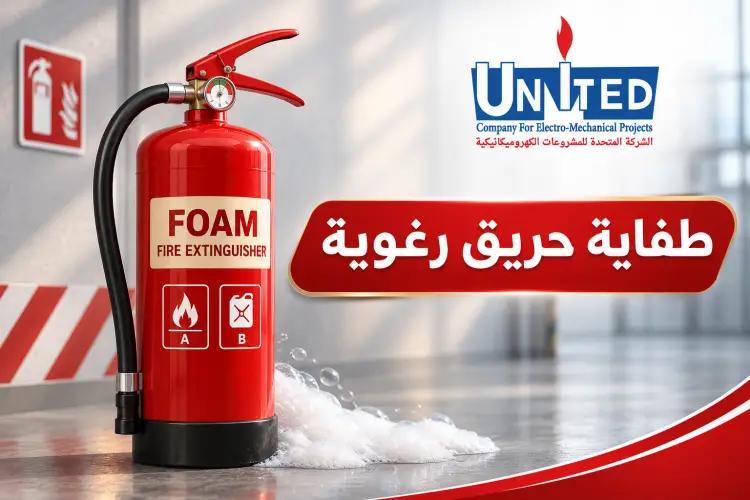
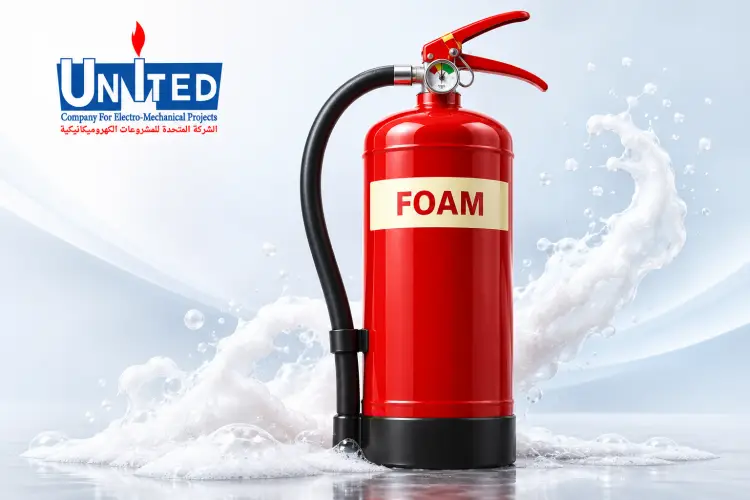
The extinguisher operates using a mixture of water and chemical foam concentrates, creating a foam layer that blankets the surface of the burning material. This traps flammable vapors, blocks oxygen supply, and cools the fuel, significantly minimizing the chance of re-ignition. Identifying a unit in an emergency is straightforward thanks to the standardized Foam fire extinguisher colour coding—typically a red body featuring a cream-colored label or band.
Important Safety Warning: Never use a conventional foam extinguisher on energized electrical equipment. Because it contains water, it can conduct electricity and expose the user to severe electric shock. Instead, use an appropriate electrical firefighting unit, such as a CO2 fire extinguisher, after verifying its suitability for the equipment and fire nature.
If you want to expand your knowledge of fire safety and protection, check out our article on Fire extinguisher company for additional information.
Foam Fire Extinguisher Types
When exploring different Foam fire extinguisher types, the extinguishing agents inside the cylinders vary according to the nature of the facility and potential fire hazards. They are divided into two primary categories:
- Aqueous Film Forming Foam (AFFF): Forms a thin, fast-spreading aqueous film over the surface of fuels and petroleum liquids, isolating them and preventing flammable vapors from rising. It is widely used across various commercial buildings and facilities.
- Alcohol-Resistant Aqueous Film Forming Foam (AR-AFFF): Specially formulated for factories and warehouses handling alcohols, solvents, and water-miscible flammable liquids. It creates a protective polymeric gel barrier that prevents the foam from breaking down upon contact with these substances, ensuring maximum extinguishing efficiency.
Comparison Table: Foam vs. Dry Powder vs. CO2 Extinguishers
To help you select the right extinguisher for your facility, the following table highlights the key differences between a foam fire extinguisher, a Dry Chemical Powder (ABC Powder) extinguisher, and a Carbon Dioxide (CO2) extinguisher in terms of suitable fire classes, safety, and post-fire impact:
|
Comparison Criteria |
Foam Extinguisher |
Dry Powder (ABC Powder) |
Carbon Dioxide (CO2) |
|
Suitable Fire Classes |
Class A (Solids) & Class B (Flammable Liquids) |
Classes A, B, and C (Solids, Flammable Liquids, and Gases, per rating) |
Classes B and C (Flammable Liquids & Electrical Fires, per rating) |
|
Suitability for Electrical Fires |
Unsuitable for live electrical equipment (risk of electric shock) |
Suitable within rated limits, though residue may damage electronics |
Ideal for live electrical equipment; leaves zero residue |
|
Post-Fire Residue & Cleanup |
Leaves liquid/foam residue that requires cleaning |
Leaves dry powder that can damage sensitive machinery |
Leaves no residue after discharge |
|
Re-ignition Prevention |
High; forms a thick insulating blanket over the fuel surface |
Extinguishes flames quickly, but offers limited re-ignition protection |
Limited; lacks sustained cooling or surface-sealing properties |
|
Recommended Locations |
Restaurants, paper storage areas, and fuel stations (per risk assessment) |
Workshops, technical buildings, vehicles, and multi-hazard areas |
Server rooms, medical clinics, and electrical control panels |
Note: Always select a foam fire extinguisher based on certified fire ratings and your facility's specific risk profile. Avoid applying foam agents to live electrical equipment, keeping in mind that Class C classifications vary across international standards.
You can also benefit from the information and tips in our article on fire hose price to better understand fire protection equipment and solutions.
Components of a Foam Extinguisher
A foam fire extinguisher consists of precision-engineered mechanical parts designed to ensure operational efficiency and rapid response during a fire emergency:
- Metal Cylinder: Manufactured from treated steel resistant to rust and corrosion, storing the extinguishing agent under optimal pressure.
- Internal Siphon Tube (Dip Tube): Extends to the bottom of the cylinder to draw the liquid solution up into the discharge system upon activation.
- Discharge Hose and Foam Applicator: Channels and directs the extinguishing agent toward the fire, while the specialized foam nozzle aerates the solution to generate rich foam.
- Operating Valve and Carrying Handle: Allows the user to transport the unit and control the release and flow of the extinguishing agent.
- Pressure Gauge (Manometer): Displays the internal pressure level, enabling quick visual verification of the unit's readiness.
- Internal Gas Cartridge (in select models): Contains compressed gas, such as carbon dioxide, to provide the necessary propellant force upon activation.
How to Use a Foam Extinguisher in an Emergency (Step-by-Step)
When a fire involving flammable liquids or combustible solids breaks out, follow the globally recognized PASS technique to operate your foam fire extinguisher safely and effectively:
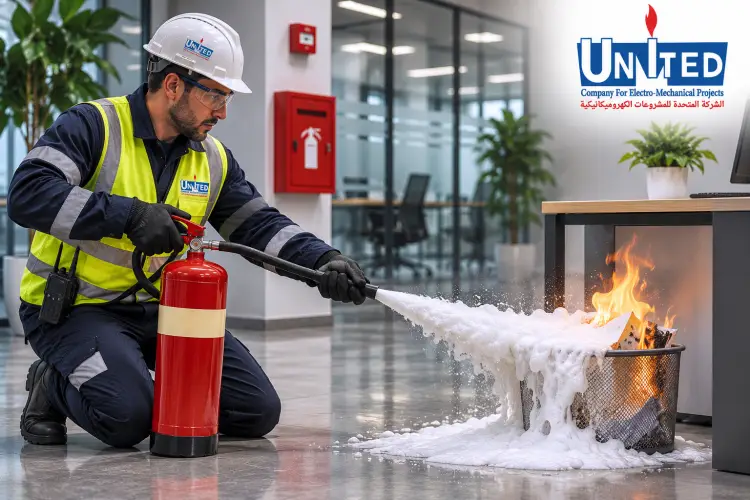
- P – Pull: Pull the safety pin to break the tamper seal and unlock the operating lever.
- A – Aim: Aim the nozzle toward the base of the fire while maintaining a safe distance.
- S – Squeeze: Squeeze the operating handle firmly to discharge the extinguishing foam.
- S – Sweep: Sweep the nozzle smoothly from side to side to blanket the entire fire area.
Application Tip: Avoid aiming the jet directly into the center of a burning liquid pool, as the discharge force can splash the fuel and spread the fire. Instead, aim the foam gently against the inner wall of the container or the edge of the burning area so it flows smoothly across the surface, forming a vapor-sealing blanket that extinguishes the flames and prevents re-ignition.
Emergency Alert: Never attempt to fight a fire yourself if it is spreading rapidly or exceeds your control capacity. Evacuate the premises immediately and contact emergency services.
Advantages of Using Foam Extinguishers
Deploying a foam fire extinguisher offers several distinct benefits that make it a preferred choice across numerous commercial and industrial settings:
- High Extinguishing Efficiency: Delivers superior knockdown power, particularly against flammable liquid fires like gasoline and oils.
- Minimal Collateral Damage: Causes significantly less damage to surrounding equipment and property compared to dry chemical powders.
- Cooling and Re-ignition Prevention: Lowers the temperature of the burning fuel and seals the surface, drastically reducing flashback risks.
- Ease of Operation: Simple, intuitive design allows effective operation without requiring advanced technical training.
- Targeted Hazard Suitability: Ideal for flammable liquid risks, and safe for accidental contact with electrical circuits only if the specific unit has passed dielectrical testing (e.g., 35kV certified).
- Multiple Capacities Available: Manufactured in various sizes to suit homes, offices, factories, and public facilities.
For more information and practical guidance on safety equipment, we recommend exploring our article on fire alarm siren.
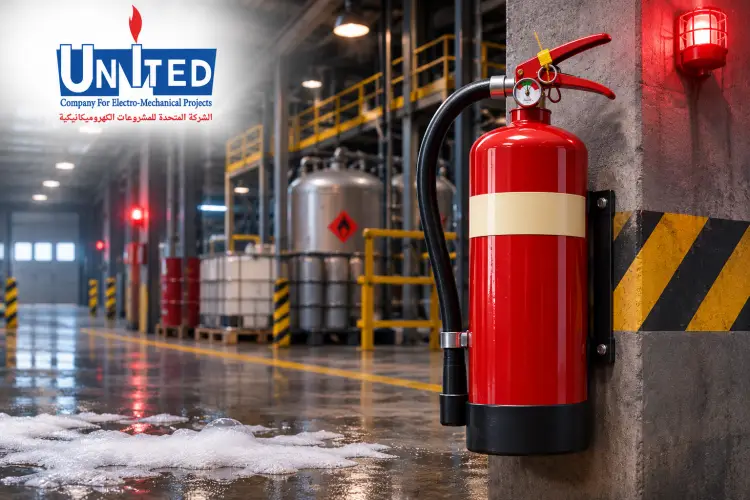
Recommended Locations for Use
A foam fire extinguisher is widely deployed in facilities requiring reliable protection against solid and liquid fire hazards, including:
- Fuel stations, service centers, and petroleum storage depots.
- Paper, wood, textile, and spinning mills and warehouses.
- Restaurant and hotel kitchens (ensuring the specific unit meets safety standards for cooking oil risks).
- Parking garages and commercial developments whose risk profiles align with foam suppression capabilities.
Commercial Capacities and Their Applications
- 6-Liter Foam Extinguisher: Ideal for administrative offices, small retail shops, and residential properties.
- 9-Liter Foam Extinguisher: Widely used in corporations, restaurants, workshops, and medium-sized retail stores.
- 45-Liter or 50-Liter Wheeled Foam Extinguisher: Built for large factories, industrial warehouses, and fuel stations, offering extended discharge capacity to cover expansive hazard zones.
If you are looking for the best Foam Fire Extinguisher price in the Egyptian market, Upco Egypt supplies certified units at highly competitive rates, complete with warranty certificates and approved compliance documentation.
On-Site Foam Extinguisher Maintenance and Refilling Services
To ensure your firefighting equipment remains reliable and ready for emergencies, Upco Egypt provides comprehensive periodic inspection and maintenance services, including:
- Pressure Gauge (Manometer) Inspection: Verifying that the pressure needle sits squarely within the manufacturer's specified operational green zone.
- Foam Extinguisher Refilling: Draining and recharging cylinders with the exact compliant foam concentrate tailored to the extinguisher's brand—whether Bavaria, Meteory, or Military Factory—in strict accordance with approved technical specifications.
- Hose and Valve Testing: Inspecting discharge hoses for cracks or blockages and testing valves and seals to guarantee leak-free operation and smooth agent flow.
Regular servicing preserves the efficiency of every foam fire extinguisher in your facility, extends its operational lifespan, and eliminates the risk of malfunction during an emergency.
You can explore more useful information by reading our article on break glass fire alarm, which provides valuable insights into fire safety and protection systems.
Why Buy Fire Extinguishers from Upco Egypt?
Upco Egypt is a trusted partner for institutions and individuals across Egypt seeking top-tier fire safety and protection equipment, thanks to several key advantages:
- Certified Products: Supplying extinguishers from leading brands and manufacturers, including Bavaria, Meteory, and the Military Factory.
- Warranty and Inspection Certificates: Providing official warranty documentation and inspection reports fully compliant with Egyptian Civil Defense requirements.
- Competitive Supply Pricing: Offering special discounts and tailored quotes for bulk orders, commercial projects, and contracting supplies.
- Fast Delivery and Technical Support: Deploying specialized teams to conduct site surveys and determine the optimal extinguisher types and capacities based on your exact site risks.
Don't leave your facility's safety to chance. Contact Upco Egypt today for a free technical consultation and a customized quote for any foam fire extinguisher capacity, alongside complete supply, maintenance, and refilling services.
- Direct Sales & Inquiries: 01006135405
- WhatsApp: Click here to request a quote for fire extinguisher supply and maintenance from Upco Egypt.
Frequently Asked Questions (FAQ)
Is a foam extinguisher suitable for kitchen cooking oil fires?
It is not recommended to use a standard foam extinguisher on deep-fat fryers or high-temperature cooking oil fires, as the water content can cause the burning oil to splatter violently. Instead, use a specialized Class K (or Class F) wet chemical extinguisher, which cools the oil and creates a soapy insulating layer (saponification) that prevents re-ignition.
What is the shelf life of a foam fire extinguisher?
The shelf life of the foam solution inside the cylinder depends on the concentrate formulation and storage conditions, typically ranging between 1 and 5 years according to manufacturer guidelines. Periodic annual maintenance and scheduled hydrostatic pressure testing of the cylinder must be carried out in accordance with certified safety standards.