CO2 Fire Suppression System: Benefits, and Applications
January 26, 2026In industrial and commercial environments containing sensitive equipment, the need for effective fire suppression systems becomes essential to ensure safety and protect property.
The CO2 fire suppression system is an ideal solution, as it works to extinguish fires with high efficiency by reducing the percentage of oxygen surrounding the fire and lowering its temperature, which leads to extinguishing the fires quickly without damaging equipment or leaving any harmful residues.
The CO2 system is used in a wide range of applications, such as generator rooms, laboratories, and industrial facilities, due to its great ability to protect both lives and property.
In this article, we will discuss how the CO2 system works, its benefits, its areas of use, and its importance in maintaining the safety of various sectors, in cooperation with United Group, the exclusive and sole agent for the UAE-based Watex Fire Pump.
What is a CO2 fire suppression system?
Carbon dioxide gas is a non-conductive and non-flammable gas, making it effective in controlling fires. A fire suppression system using carbon dioxide gas is characterized by its ability to extinguish fires without causing any property damage, and it does not require cleaning after the fire is controlled.
The CO2 fire suppression system works by releasing a quantity of carbon dioxide gas, which reduces the oxygen gas, the essential element for the continuation of combustion, thus contributing to the effective extinguishing of the fire.
Carbon dioxide fire extinguishers are available in different sizes, so it is best to consult with specialists to determine the appropriate size to better protect your property.
Learn more about: Fire extinguishing systems
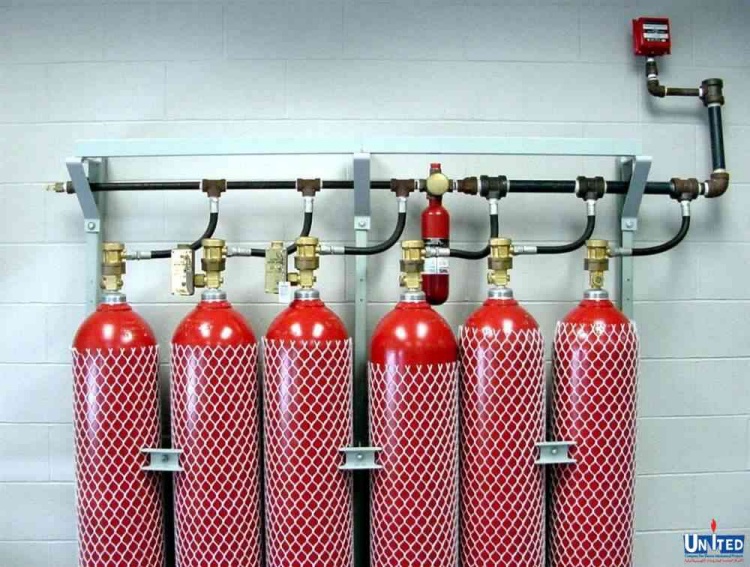
Where are carbon dioxide systems used?
Carbon dioxide (CO₂) fire suppression systems are widely used in places containing sensitive equipment or flammable materials where water cannot be used to extinguish fires. Some of the most prominent places of use are:
- Electrical transformer rooms to protect electrical equipment from damage.
- Printing presses to prevent the ink and paper from catching fire.
- Inside warehouses containing flammable materials or large stockpiles, rapid and effective fire protection is required.
These systems provide rapid and effective extinguishing without leaving any residue that could harm equipment or stored products. Contact United Company now to get the best CO2 fire suppression system.
Design of a carbon dioxide fire suppression system
The carbon dioxide fire suppression system is designed to be
The CO2 fire suppression system is designed in a precise manner that requires a good understanding. The design begins with assessing the risks and identifying sensitive areas that need special protection, such as generator rooms, laboratories, and industrial facilities.
The size and type of fire extinguishers are determined based on the size of the area and the type of flammable materials; the design includes the installation of CO2 gas cylinders.
Under high pressure with carefully designed distribution networks to ensure that the gas is effectively directed towards the fire area.
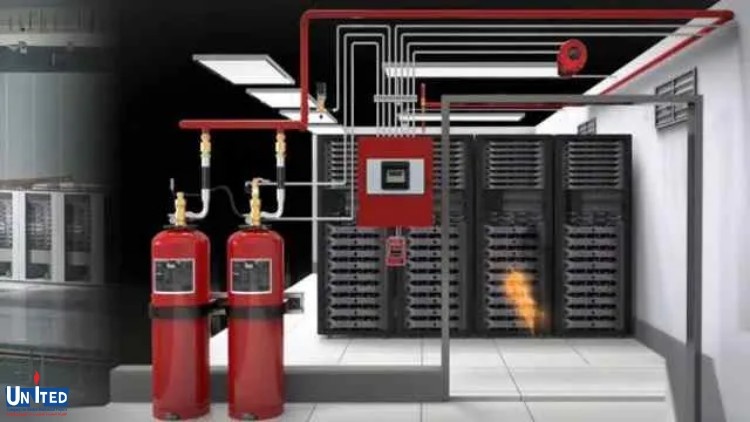
The systems are equipped with advanced sensors to detect fire and automatically release gas when needed. Audio and visual alarm systems are also designed to alert individuals to the presence of a fire.
The design must include suitable ventilation passages to release the gas after extinguishing and ensure that people are not exposed to dangerous levels of CO2. In addition, clear instructions and periodic training must be provided to users to ensure the system operates efficiently.
Through these integrated components, the CO2 fire suppression system with carbon dioxide gas provides protection for facilities and installations, thus reducing the damage that can occur to lives and property.
CO2 fire suppression system components
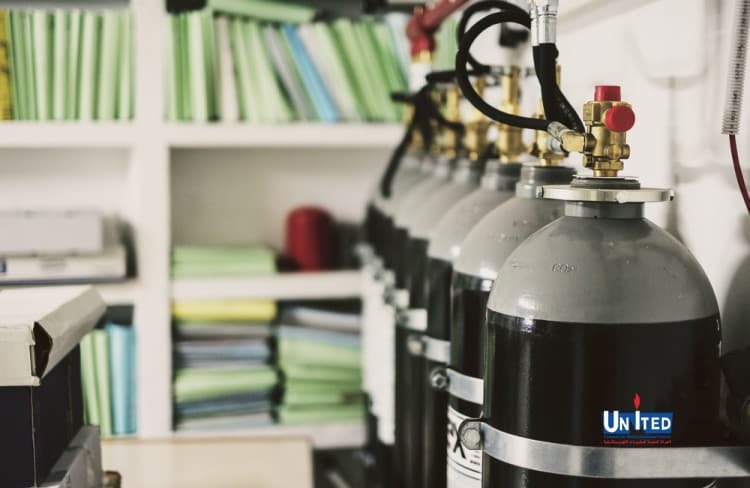
- CO2 fire suppression system gas cylinders: The number and size of the cylinders are determined according to the size of the room to be extinguished using hydraulic calculations according to the NFPA code.
- Gas discharge pipe network: The diameters of the pipe network are determined according to the engineering design and hydraulic calculations that determine the number of nozzles in the chamber.
- Fire extinguishing panel and sensors: It is responsible for receiving the signal from the sensors and sending it to the electromagnetic valve to complete the discharge process.
- The network of wires and pipes for the alarm system.
- Fire alarm siren.
- Fire alarm bell.
- Manual operating device.
- The off switch.
- A scale for carbon dioxide cylinders.
Learn more about: fire extinguishing equipment
Why are CO2 fire extinguishers without an indicator?
Under a pressure of approximately 55 bar and a temperature of 20 degrees Celsius, the fire extinguisher is filled with carbon dioxide gas, which turns the gas into a liquid state known as liquefied CO2, and sometimes into dry ice. This liquid turns into a gas as soon as there is space that allows it to expand.
When using a fire extinguisher, any amount released is compensated for by the conversion of an equivalent amount of liquid into gas, which keeps the pressure constant inside the cylinder for this reason.
Installing a pressure gauge on these fire extinguishers is not useful because the liquid will remain constant, and the only way to check the contents of a CO2 fire extinguisher is to periodically measure its weight.
How is a CO2 system installed?
The installation process for a CO2 fire suppression system begins with identifying the system requirements based on the size and type of room.AndThe area to be protected determines the number and size of CO2 cylinders required using hydraulic calculations and NFPA code standards to ensure the appropriate quantity of gas is provided to extinguish the fire efficiently.
The network of pipes designated for gas discharge is installed, with their diameters determined based on engineering design and hydraulic calculations to ensure proper gas distribution.
Installing the system's control panel, which receives signals from the calculations and directs them to the electromagnetic valve to start the discharge process when a fire is detected.
The wiring and piping network for the alarm system, which includes the siren and fire alarm bell, is also installed.To alertFor individuals in the area, the CO2 fire suppression system includes a manual activation device and a shut-off switch.To allowManual control of the unloading process when needed.
A scale is installedFor CDsCO2 is used to monitor gas levels and ensure sufficient supply when needed. This arrangement ensures the system is ready in case of emergency, thus contributing to the protection of facilities and individuals.
How to install CO2 cylinders
The process of installing carbon dioxide cylinders begins with identifying a suitable location where the site must be easily accessible and safe, away from sources of heat and humidity.
The CO2 fire suppression system cylinders are then secured using brackets or clamps to ensure their stability. It is essential to secure the cylinders tightly to prevent tipping or movement, while providing sufficient space to facilitate maintenance and inspection.
After the cylinders are installed, they are connected to the pipe system designed to transport the gas. The pipes are installed in accordance with safety and pressure standards, and all connections and switches must be checked to prevent leaks.
The system is tested to ensure there are no leaks and that it is operating properly. It must also be ensured that all parts comply with the NFPA code and international standards, and periodic checks are carried out to ensure that the CO2 fire suppression system works efficiently in emergencies.
Learn more about: fire sprinkler system
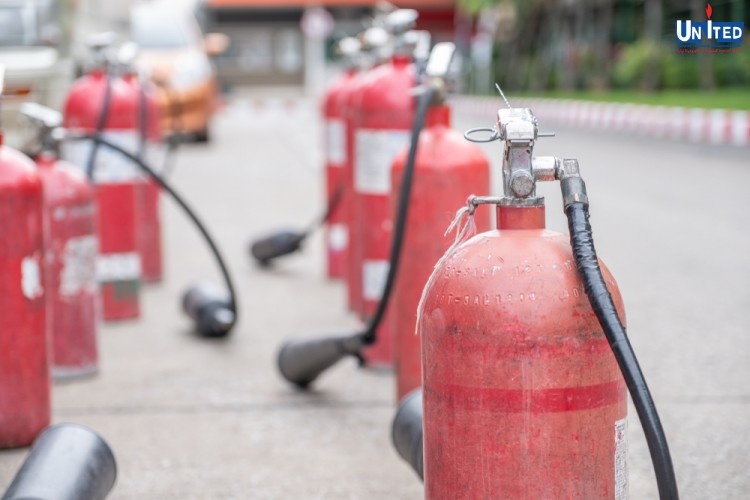
How are fire systems maintained?
United Group, the exclusive and sole agent for Watex fire pumps, a leading Emirati company in the supply and installation of fire systems, offers periodic maintenance services to ensure the safety of equipment and fire suppression in accordance with international standards. The maintenance steps include the following:
- Maintenance and adjustment of water pumps.
- Inspection and maintenance of all types of spray systems.
- Inspection of pipes and tubes.
- Check the valves and bolts.
- Water tanks.
- Fire alarm maintenance.
If you are looking for companies to maintain your CO2 fire suppression system, United Group offers you the best maintenance contracts.For the systemFirefighting, and we also specialize in the installation of fire suppression systems.
It is United Company Group is among the best fire alarm companies in Egypt. Contact us now to get more details about our services.
Frequently Asked Questions
What is the difference between an FM 200 system and a CO2 system in fire fighting?
The FM-200 system is considered safe for humans, so it can be used in populated areas, while the CO₂ system is characterized by its high ability to extinguish complex fires and its lower cost, but it requires the place to be evacuated immediately before it is operated.
When should CO2 fire cylinders be refilled?
Carbon dioxide (CO₂) fire cylinders must be refilled immediately after any use, even if partial, or if periodic inspection shows a decrease in gas weight of 10% or more.
It is recommended to check the weight every 3 to 6 months, and the filling process is usually carried out every 1 to 2 years, with a comprehensive inspection of the cylinders every 5 to 10 years.